
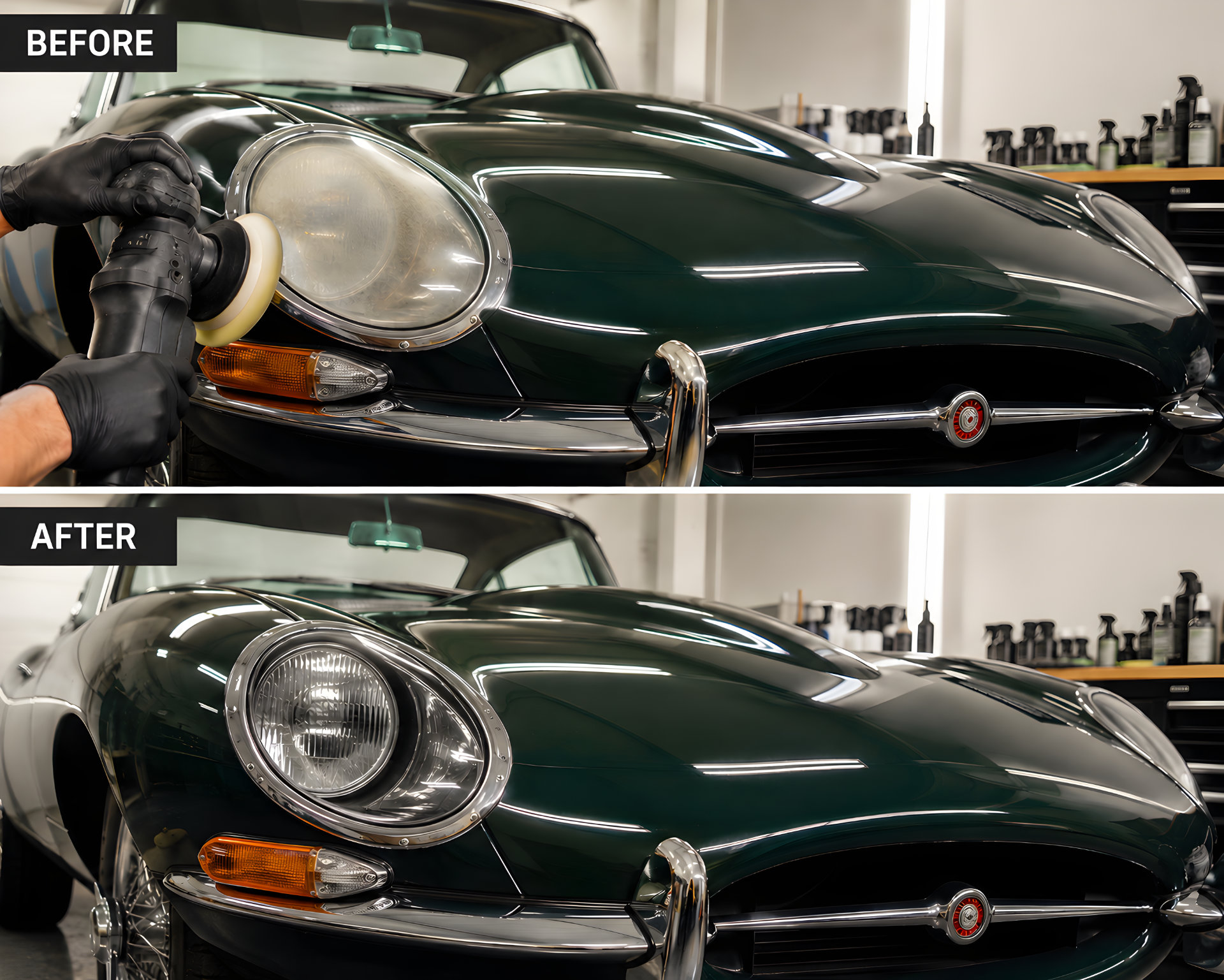
Cloudy headlights creep up slowly. One evening you notice a dull glow where there used to be a crisp beam. Night driving feels harder, road signs bloom with glare, and wet-weather journeys are tiring. If you have an MOT due before summer, or you simply want your car to look sharp and feel safer after winter salt and grime, this guide will help you decide what to do next.
I restore headlamps in my insured, CCTV-monitored studio in Verwood, using controlled wet sanding and machine polishing to recover clarity, then sealing the surface so it stays clear for longer. Below I explain why lenses haze, when restoration beats replacement, MOT implications in the UK, and how to maintain the result through summer and beyond.
Why headlights go cloudy
Most modern headlamps are polycarbonate with a thin UV-resistant clearcoat. Sunlight, heat cycles, road salt, and wash chemicals slowly break this layer down. Once the UV layer fails, oxygen attacks the plastic itself, turning the surface yellow and milky. Fine stone pitting and previous harsh cleaning can accelerate it. The result is scatter and reduced light output, especially noticeable on dark rural roads.
You can slow this process with sensible washing and a protective topcoat, but once oxidation takes hold you need a physical correction to remove the damaged layer and level the surface.
Professional restoration, step by step
Studio-based restoration gives consistent light, temperature, and dust control, which matters when chasing a crisp optical finish.
-
Inspect and mask: I assess lens condition, check for internal moisture or reflector damage, and mask surrounding paint and trims.
-
Machine wet sand: I level the oxidised layer using graded abrasives. The goal is uniform micro-scratches, not deep gouges.
-
Polish and refine: Multi-stage machine polishing removes sanding marks and restores transparency. I wipe down between stages to monitor true progress, not oil-filled gloss.
-
Protect: I apply a dedicated ceramic coating to add UV resistance and hydrophobics, helping the lens shed water and resist re-soiling.
Turnaround is typically quick, and your vehicle stays indoors under insurance and 24-hour CCTV while at the studio.
If you are near Ringwood and want to pair clear headlights with a safer wash routine this spring, see how we handle a careful car paint correction from a detailing perspective. If you prefer to visit my Verwood studio directly, explore our vehicle detailing service in Verwood.
UK MOT considerations
Headlamp condition is an MOT safety item in the UK. Testers look for:
-
Light output and aim that are not seriously reduced or adversely affected by damage or deterioration.
-
Colour and pattern that meet standards without excessive scatter or dazzle.
Cloudy, yellowed, or heavily pitted lenses can reduce intensity and distort the beam pattern. That can be marked as a Major defect, which fails the MOT. Mild haze may get an advisory if output remains acceptable. If your test is due soon and the lenses look dull, restoration before the MOT is a smart, low-stress step.
Can you buff out cloudy headlights?
Light surface haze can sometimes improve with a mild polish. True oxidation is deeper. Simply buffing the top without levelling the failed layer will leave patchiness and quick re-hazing. Proper machine wet sanding re-sets the surface so polishing can achieve full optical clarity. Done correctly, you remove just enough material to restore transparency while preserving lens thickness.
Is restoration worth it versus replacement?
Replacement units can be expensive, vary in quality, and often need bumper loosening or coding. Professional restoration usually costs far less, keeps original fit and finish, and delivers a visible safety gain. It is especially worthwhile when:
-
Plastic is oxidised or lightly pitted, but the lens is structurally sound.
-
Reflectors and internals are clean, and seals are intact.
-
You plan to keep the car and want quicker, safer night driving.
Replacement is the right call if the lens is cracked, deeply crazed, delaminating from inside, or the reflector is dull from internal heat damage. I will advise honestly after inspection.
Ceramic coating for longer-lasting clarity
A ceramic coating on headlights adds UV resistance and hydrophobic behaviour. It helps prevent rapid re-oxidation, keeps lenses cleaner between washes, and makes bugs and road film easier to remove. It is not a magic shield, but paired with good washing it can significantly extend clarity. As a certified CarPro installer, I apply coatings in a controlled environment so the chemistry cures correctly on the freshly corrected surface. If you are considering wider protection, my Verwood studio also offers ceramic coating and paint protection options for paintwork.
DIY myths and what actually works
Toothpaste: It contains mild abrasives and can brighten lightly hazed areas, but it lacks controlled cut and leaves no durable protection. Expect fast re-hazing.
WD-40 or similar oils: They temporarily wet the surface to make it look clearer, but they attract dust and wash away. Not a fix, and not MOT-friendly.
Kitchen scourers and harsh compounds: They can gouge the lens, create deep trails, and make glare worse. Avoid.
What helps: Careful machine wet sanding with the right abrasives, controlled polishing, and a proper UV-resistant topcoat. If you do not have experience or equipment, professional restoration is safer for both optics and surrounding paint.
Quick maintenance tips after restoration
-
Wash gently: Pre-rinse, then use pH-neutral shampoo and a clean wash mitt. Avoid harsh APCs on lenses.
-
Dry and protect: Keep the coating clean. A silica-based top-up spray during routine washes can help.
-
Park smart: When possible, reduce long-term front-end sun exposure.
-
Remove bugs promptly: Soften with warm water and a dedicated bug remover, not abrasives.
If you are planning a broader spring refresh, you can combine headlight work with gloss improvement through machine polishing in Verwood or explore our Ringwood-focused car detailing options.
FAQ
Are cloudy headlights an MOT failure?
They can be. If haze seriously reduces light output or distorts the beam, it is typically a Major defect and a fail. Milder deterioration may receive an advisory.
Is headlight restoration worth the cost?
Usually yes. It restores output, improves safety, and enhances appearance for a fraction of the price of new units. It is most cost-effective when the lens is sound but oxidised.
Can you buff out cloudy headlights?
Light haze may respond to a gentle polish, but true oxidation needs controlled wet sanding followed by polishing and protection. Buffing alone often leaves quick-return hazing.
Is ceramic coating good for headlights?
Yes. A quality ceramic adds UV resistance and hydrophobics, helping the lens stay clearer for longer and making cleaning easier. It will not fix existing oxidation, so apply it after proper correction.
How I handle your car at MK Auto Detailing
I work from Unit 8 Holloways, Bessemer Close, Ebblake Industrial Estate, Verwood, BH31 6AZ. Every car is handled by me, with full insurance and 24-hour CCTV while it is onsite. For headlights, I use a test-spot approach to choose the lightest effective sanding and polish combination, refine until the optics are right, then seal with a ceramic so you leave with brighter lights and a plan to keep them that way. If you are in Verwood, Ringwood, Cranborne, Broadstone or the wider Dorset area, I can help you prepare for summer driving with safer night visibility and a cleaner look.
What next ?
Clear headlights matter for MOT compliance, safety, and the way your car presents. Haze happens when the UV layer fails and the plastic oxidises. Proper restoration uses controlled wet sanding, refinement, and a protective ceramic to bring back clarity and slow re-oxidation. DIY quick fixes are short-lived. If your lights are dull before a test or a summer trip, book a studio-based restoration and I will advise whether correction or replacement is right for your car. Call 07975 858850 to discuss your lenses and schedule a visit to the Verwood studio.
